
Products
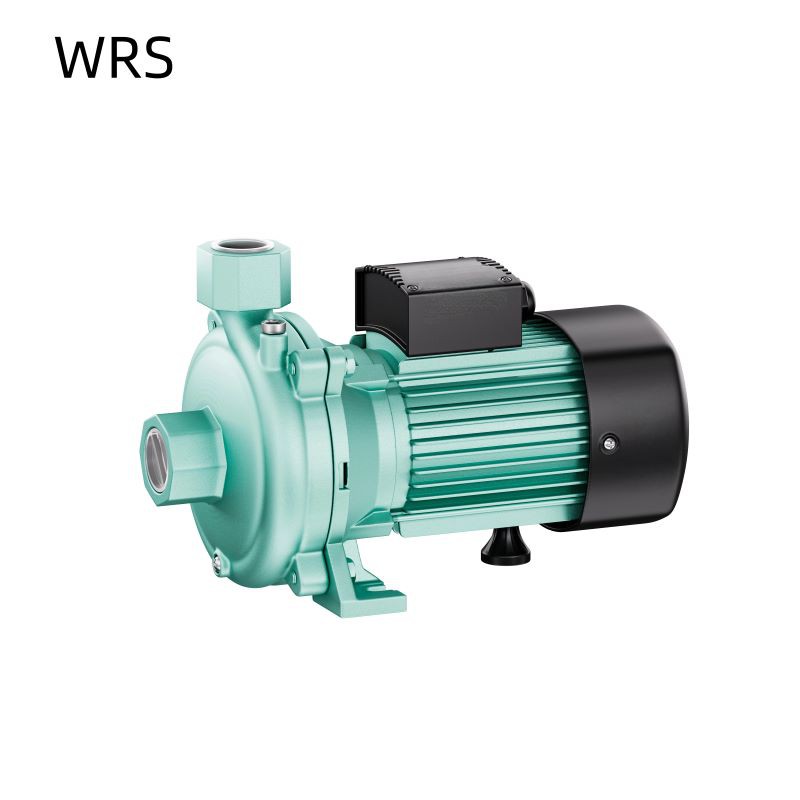


Horizontal Circulation Pump
Flow Rate: 4.8~28m³/h
Head range: 15~30m
Caliber: 25~50mm
Motor power: 200~1500W
Speed range: 2850r/min
Media temperature: ≤90℃
Ambient temperature:≤40℃
Insulation Class: F+
IP Rating: IP44+
Features
Default Configuration
| ➣ PPO Impeller / 304 Stainless Steel Impeller |
| ➣Motor Thermal Protector: Standard for Single-phase voltage 220V models |
Introduction
The WRS Horizontal Circulation Pump is a centrifugal inline pump designed for stable and reliable hot water circulation. Its hydraulic section mainly consists of the pump body and impeller, with a practical structure that supports efficient daily circulation and steady system operation.
The pump body of the WRS Series is made of HT200, offering good structural strength and dependable performance under normal hot water circulation conditions. The impeller is available in modified PPO engineering plastic or stainless steel, allowing more flexible configuration based on different application needs. This material combination helps improve durability and ensures reliable long-term operation.
With its stable structure, practical material options, and built-in overheating protection, the WRS Series is a reliable choice for hot water circulation systems that require safe and continuous operation.
Product Advantages

Streamlined Design
Featuring a minimalist component count, this design ensures ease of manufacturing, quick installation, and effortless routine servicing.

Thermal Overload Protection
The single-phase 220V motor is equipped with a built-in thermal protector. The pump will automatically shut down if the motor winding temperature reaches the preset safety limit.

Optional Configuration
We offer different materials for the pump impeller, as well as single-phase and three-phase for diverse voltage requirements.
Pump Maintenance
Maintenance during operation:
The suction pipeline must always be completely filled with liquid. Do not allow the pump to operate for a long time under cavitation conditions.
Check the motor current regularly. It must not exceed the motor's rated current.
After long-term operation, mechanical wear may cause increased noise and vibration. In this case, stop the pump for inspection. If necessary, replace wearing parts and bearings. In general, the recommended overhaul interval for the unit is one year.
Mechanical seal maintenance:
The mechanical seal must be lubricated with a clean medium free of solid particles.
Never allow the mechanical seal to run dry.
Before starting the pump, rotate the motor shaft by hand a few turns to prevent sudden startup from causing damage or cracking to the graphite seal ring.
The allowable leakage rate is 3 drops per minute. If leakage exceeds this value, the mechanical seal should be inspected.
Anti-freezing measures in winter:
In winter, the pump and pipelines may freeze, which can damage the piping and deform or crack the pump, making it unable to draw water. Anti-freezing measures should therefore be taken.
Horizontal pipelines should be buried more than 30 cm underground.
To prevent the residual liquid inside the pump from freezing in winter, loosen the drain screw in advance and completely drain the water from the pump.
Note: Do not cover the motor or pump with flammable materials for frost protection, as this may cause a fire.
Restarting the pump after long-term shutdown:
If the pump has been left unused for a long time and the motor does not run after the power is switched on, it may be because impurities inside the pump have solidified or stuck the rotating parts. In this case, disconnect the power supply, insert a screwdriver into the slot at the rear of the motor, and turn it to rotate the pump shaft. It is recommended to rotate it for at least 15 seconds. If the pump shaft then turns smoothly without sticking, the pump can be put back into service.
Certificate


FAQ
Q: How does a horizontal circulation pump fit into a system layout?
A: It is usually installed as part of a loop where liquid keeps cycling through equipment and pipelines. The pump supports flow movement within that loop, helping different parts of the system stay connected and work together.
Hot Tags: horizontal circulation pump, China horizontal circulation pump manufacturers, suppliers, factory
You Might Also Like


Send Inquiry
